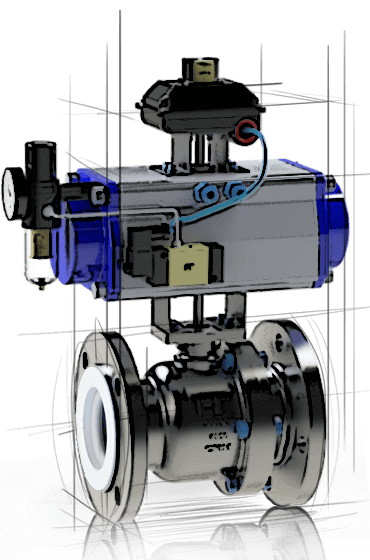
Showing posts with label PTFE Lined Ball Valve. Show all posts

Wednesday, 23 September 2026

How to Select the Right PTFE Lined Ball Valve for Chemical Applications

 Chemical processing systems often operate with fluids that can be corrosive, reactive, toxic, or otherwise difficult to handle. Choosing a valve for these conditions requires more than checking the pipeline size. A PTFE Lined Ball Valve can provide an effective solution for many chemical services, but only when the lining, pressure rating, temperature range, body construction, and operating method are correctly matched to the application.

Start With the Process Media

The first consideration should always be the fluid being handled.

Identify the chemical, concentration, temperature, pressure, and physical state of the media. Chemical compatibility should then be checked against the PTFE lining, seats, ball, stem, and other wetted components.

A valve should never be selected only because PTFE is generally regarded as chemically resistant. Specific chemicals and operating conditions can influence performance.

Consider Operating Temperature

Temperature has a direct effect on the performance of polymeric lining materials.

PTFE is capable of handling many demanding chemical applications, but it has defined temperature limits. At elevated temperatures, material properties and sealing performance must be considered carefully.

The valve manufacturer's published pressure-temperature rating should therefore be used during selection.

Check the Pressure Rating

The valve must be capable of safely handling the maximum operating and design pressure of the system.

Consider both normal operating pressure and possible pressure fluctuations. The selected pressure class should be appropriate for the pipeline and service conditions.

Temperature and pressure should always be evaluated together rather than independently.

Select the Appropriate Valve Size

The valve size should correspond to the pipeline and required flow conditions.

A full-bore ball valve may be preferred where minimizing pressure drop is important. However, sizing should also consider flow velocity, system requirements, and the intended function of the valve.

Oversizing a valve can also create operational problems, particularly when automated operation is involved.

Choose Manual or Automated Operation

For occasional isolation, a manually operated valve may be sufficient.

Where the valve needs to operate frequently, remotely, or as part of an automated process sequence, a pneumatic or electric actuator may be more suitable.

The actuator should be sized according to the valve's operating torque and the process requirements.

Consider Safety Features

Chemical applications often require additional attention to operational safety.

Features such as an anti-blowout stem and anti-static arrangement can be valuable depending on the application. Proper installation, maintenance, and compliance with applicable standards are equally important.

PTFE, PFA or FEP?

The required lining should be selected according to chemical compatibility, temperature, purity requirements, and application conditions.

PTFE is widely used because of its chemical resistance. PFA and FEP may be considered where specific application requirements make them more suitable.

The correct choice should be based on manufacturer data and the actual process conditions.

Conclusion

Selecting a PTFE Lined Ball Valve for chemical applications requires a complete understanding of the process rather than simply choosing a corrosion-resistant valve. Media compatibility, temperature, pressure, size, lining material, actuator requirements, and safety features should all be evaluated before final selection. A properly engineered valve can provide dependable isolation and long-term service in demanding chemical environments.

Tuesday, 15 September 2026

PTFE Lined Ball Valve vs Unlined Ball Valve: Key Differences Explained

Selecting the right ball valve is not simply a matter of choosing a valve based on size and pressure rating. The nature of the process media plays an equally important role. When a pipeline carries corrosive or chemically aggressive fluids, engineers often compare a PTFE Lined Ball Valve with an unlined ball valve. Although both valves use the same basic quarter-turn ball valve principle, their internal construction and suitability for different services can be significantly different.

What Is an Unlined Ball Valve?

An unlined ball valve generally has metallic internal and wetted surfaces. The body, ball, stem, and other components are manufactured from materials selected according to the required pressure, temperature, and media conditions.

For compatible fluids, this construction can provide excellent mechanical strength and reliable performance. However, when highly corrosive media are involved, material compatibility becomes particularly important.

If the selected metal is not sufficiently resistant to the process fluid, corrosion can affect the valve's internal surfaces and potentially reduce its service life.

What Is a PTFE Lined Ball Valve?

A PTFE lined ball valve uses a fluoropolymer lining to protect the internal surfaces that come into contact with the process fluid.

The metallic body provides structural strength, while the PTFE lining provides chemical resistance. This combination can be advantageous in applications where conventional metallic construction may be vulnerable to chemical attack.

The lining must still be carefully selected because PTFE is not automatically suitable for every chemical, concentration, temperature, or operating condition.

Chemical Resistance

One of the most important differences between lined and unlined ball valves is their approach to chemical resistance.

With an unlined valve, the wetted material itself must be compatible with the process fluid. With a PTFE lined valve, the lining provides an additional protective barrier.

This makes PTFE lined construction particularly attractive for many chemical-processing applications. However, engineers should always check chemical compatibility rather than selecting PTFE solely because the fluid is classified as corrosive.

Temperature and Pressure

Temperature and pressure are equally important during valve selection.

PTFE has excellent chemical resistance, but fluoropolymer materials have defined temperature limits. Increasing temperature can influence mechanical properties, sealing performance, and pressure capability.

Therefore, a PTFE lined ball valve should always be selected according to the manufacturer's pressure-temperature rating for the specific design and lining.

An unlined metallic valve may provide advantages in certain high-temperature services where the process conditions exceed the practical limits of the selected lining.

Maintenance and Service Life

The service life of either valve depends on the process conditions, construction quality, operating cycle, media, and correct selection.

In corrosive service, PTFE lining can help protect the valve body from direct chemical exposure. This can reduce corrosion-related deterioration when the lining remains intact and compatible with the media.

Which Valve Should You Choose?

There is no universal answer. An unlined valve may be appropriate where the body and wetted materials are fully compatible with the process media. A PTFE lined valve can be advantageous where chemical resistance is a major concern.

The decision should consider media compatibility, temperature, pressure, concentration, operating frequency, required shut-off performance, and automation requirements.

Conclusion

The difference between a PTFE lined and an unlined ball valve is primarily related to how the valve manages contact with the process media. PTFE lining provides an additional chemical-resistant barrier, while unlined valves depend directly on the corrosion resistance of their selected materials. Understanding the actual process conditions is the best way to determine which construction is appropriate.

Friday, 11 September 2026

What Is a PTFE Lined Ball Valve? Working Principle, Features and Applications

Industrial processes that handle corrosive chemicals, aggressive fluids, acids, solvents, and other challenging media require valves that can provide dependable isolation without being rapidly affected by the process fluid. This is where a PTFE Lined Ball Valve becomes an important solution. By combining a robust valve body with a chemically resistant fluoropolymer lining, these valves are designed to protect wetted surfaces while providing reliable shut-off performance. They are widely considered for chemical processing, pharmaceuticals, specialty chemicals, water treatment, and other process industries where corrosion resistance and operational reliability are important.

What Is a PTFE Lined Ball Valve?

A PTFE Lined Ball Valve is a quarter-turn isolation valve in which the internal surfaces exposed to the process fluid are protected with PTFE (Polytetrafluoroethylene) or another suitable fluoropolymer lining.

The basic construction includes the valve body, ball, stem, seats, and lining. Instead of allowing the process media to directly contact the metallic body, the lining creates a protective barrier. This construction helps reduce the possibility of corrosion and chemical attack on the valve body.

PTFE is particularly valued for its broad chemical resistance, making it suitable for many aggressive process fluids. However, the exact suitability depends on the chemical composition, concentration, operating temperature, pressure, and other service conditions.


How Does a PTFE Lined Ball Valve Work?

The operating principle is relatively simple. Inside the valve body is a spherical ball with a central bore. When the valve is fully open, the bore aligns with the pipeline, allowing the process fluid to pass through the valve.

When the valve is rotated approximately 90 degrees, the bore moves perpendicular to the pipeline and blocks the flow. The ball and seat arrangement creates the sealing mechanism required for shut-off.

Because of this quarter-turn operation, PTFE lined ball valves are particularly suitable for automated isolation. Pneumatic and electric actuators can be connected to the valve to provide remote operation and process control.

Why Is PTFE Lining Important?

The major advantage of PTFE lining is its resistance to many corrosive chemicals. In conventional metallic valves, aggressive media can attack the internal surfaces over time. A suitable PTFE lining provides a protective layer between the process fluid and the metallic body.

This can be especially valuable when the process involves acids, alkalis, solvents, or other chemically aggressive substances.

PTFE also provides a relatively low-friction surface, which can support smooth valve operation when the valve is properly designed and selected for the application.

Key Features of PTFE Lined Ball Valves

A well-designed PTFE lined ball valve may incorporate features such as an anti-blowout stem, anti-static arrangement, standardized actuator mounting, and corrosion-resistant wetted surfaces.

The quarter-turn design also allows quick opening and closing compared with many multi-turn valve designs. Depending on the construction, lined ball valves may be installed for bidirectional flow service, providing flexibility during piping design.

Applications

PTFE lined ball valves are commonly considered for chemical processing, petrochemical operations, pharmaceutical manufacturing, specialty chemical plants, water and wastewater treatment, acid and alkali handling, and other corrosive-fluid applications.

They can also be integrated into automated process systems where frequent or remote isolation is required.

Final Thoughts

A PTFE Lined Ball Valve is primarily a solution for reliable flow isolation where chemical resistance is a critical requirement. Its combination of a strong valve body, fluoropolymer lining, quarter-turn operation, and automation compatibility makes it suitable for a wide range of process applications. Correct selection remains essential, particularly with regard to media compatibility, temperature, pressure, valve size, and lining material.

Tuesday, 22 October 2024

The Advantages of PTFE, PFA, FEP Lined Ball Valves in Chemical Processing

In chemical processing, lined ball valves offer significant benefits due to their corrosion-resistant properties and ability to handle aggressive fluids. These valves feature an internal lining that protects the metal valve body from chemical exposure, making them ideal for environments where corrosive substances are prevalent. This article explores the advantages of using lined ball valves in chemical processing applications.

Lined Ball Valves

One of the primary benefits of lined ball valves in chemical processing is their ability to handle a wide range of corrosive fluids. The lining materials used, such as PTFE, PFA, or FEP, provide excellent resistance to chemical reactions, ensuring the valve's longevity and reducing the need for maintenance. This capability is especially important in processes involving strong acids, alkalis, and solvents that can quickly corrode standard metal valves.

The smooth interior surface of the lining also helps to maintain consistent fluid flow by minimizing friction, which can be a concern in processes requiring precise control. Lined ball valves are also known for their tight shut-off capabilities, making them suitable for applications where preventing leaks is critical, such as in the handling of hazardous chemicals.

Additionally, PTFE, PFA, FEP lined Ball valves are easy to operate and have a relatively low torque requirement, which can help reduce wear on actuators and improve overall system efficiency. They are suitable for both manual and automated operations, providing flexibility for integration into various chemical processing systems.

Implementing lined ball valves in chemical processing can lead to enhanced safety, lower maintenance costs, and increased system reliability.

How to Select the Right PTFE, PFA, FEP Lined Ball Valve: Factors to Consider

Choosing the right lined ball valve for industrial applications involves considering factors such as the type of lining material, valve size, pressure rating, and end connections. In this article, we will discuss the essential factors to consider when selecting a lined ball valve, including the advantages of different lining materials and how to match the valve's features to the intended application.

The type of lining material used in a PTFE, PFA, FEP Lined Ball Valve is one of the most crucial considerations. PTFE is the most popular choice due to its high resistance to a broad range of chemicals, including strong acids, bases, and solvents. It also offers excellent temperature resistance. For applications where higher pressure and mechanical strength are required, PFA-lined valves might be a better choice, as PFA has better mechanical strength while maintaining chemical resistance. FEP-lined valves, on the other hand, are suitable for applications with frequent temperature fluctuations due to their flexibility.

PTFE, PFA, FEP Lined Ball Valve

Another important factor is the valve size and pressure rating. Larger valves or those used in high-pressure systems may require reinforced linings to prevent deformation. The end connections, such as flanged, threaded, or socket-weld, should also be chosen based on the piping system requirements.

It is also essential to consider the type of fluid being handled, its temperature, and any potential risks associated with chemical permeation. The right selection can help avoid leaks, corrosion, and other issues that may compromise safety and efficiency.

By carefully considering these factors, industries can select the most suitable lined ball valve for their applications, ensuring reliable operation and prolonged service life.

Wednesday, 20 December 2023

Unveiling the Superiority of PTFE Lined Valves: The Ultimate Guide

In the realm of fluid management systems, PTFE lined valves stand as a testament to innovation and efficiency. Combining the robustness of valve design with the exceptional properties of PTFE (Polytetrafluoroethylene), these valves have revolutionized industries across the globe.

Understanding PTFE Lining

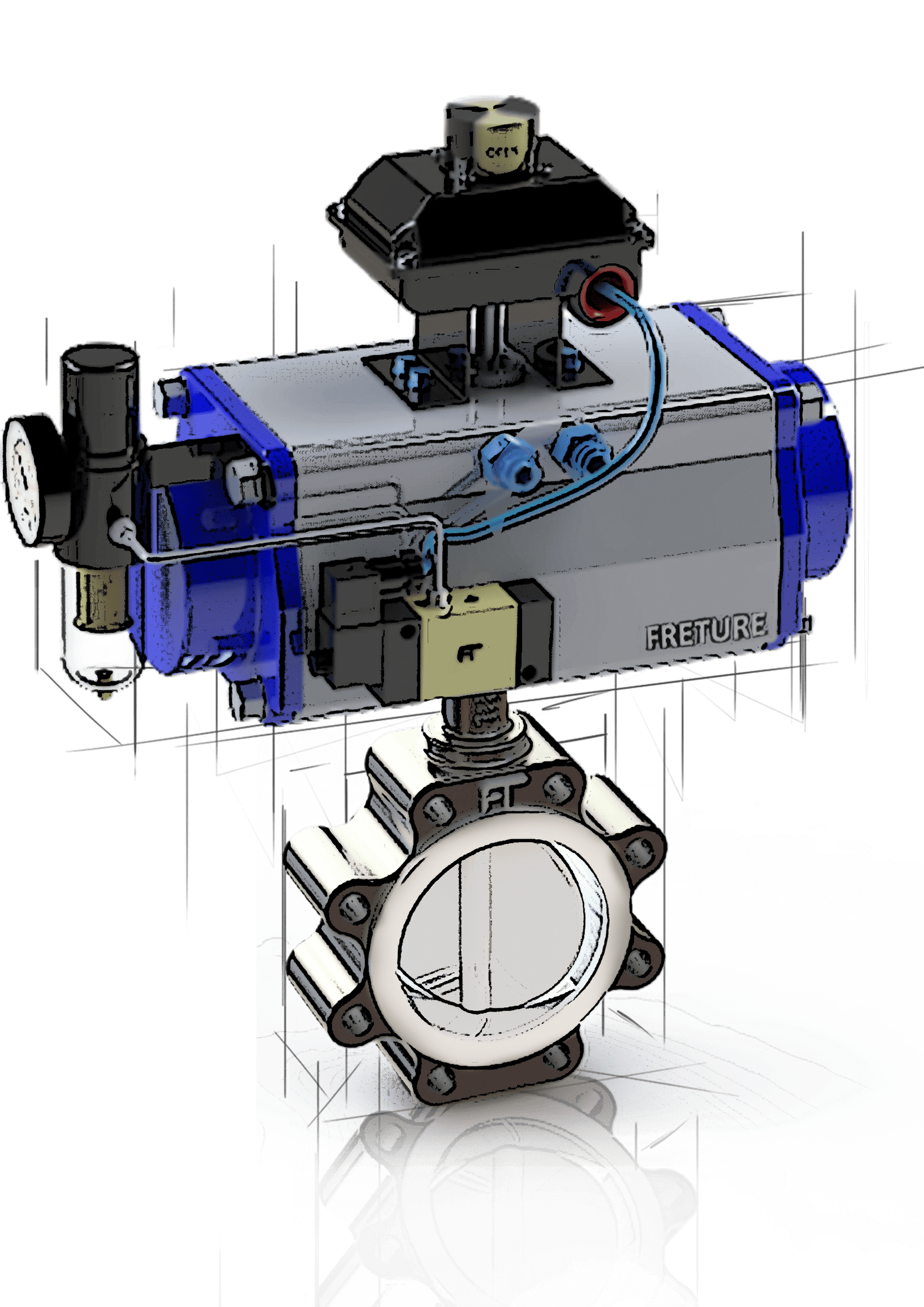
The secret behind the prowess of PTFE lined valves lies in the exceptional characteristics of PTFE itself. Renowned for its non-stick, non-reactive nature and resistance to extreme temperatures and corrosive substances, PTFE is an engineering marvel. By lining the internals of valves with PTFE, manufacturers elevate the valve's performance to unparalleled levels.

PTFE Lined Butterfly Valve

The Advantages in Action

Corrosion Resistance: PTFE's inertness shields valves from corrosive materials, making them ideal for handling aggressive chemicals and acids, ensuring longevity and reliability.

Temperature Extremes: Operating in environments with extreme temperatures becomes feasible due to PTFE's exceptional thermal stability.

Minimal Friction: PTFE's low coefficient of friction guarantees smooth operation and minimal wear and tear, reducing maintenance needs.

Hygienic Applications: In industries like pharmaceuticals and food processing, PTFE lined valves maintain product purity by preventing contamination.

Applications Across Industries

From chemical processing and petrochemicals to pharmaceuticals and food & beverage, the versatility of PTFE lined valves is unmatched. They excel where conventional valves fall short, offering a crucial solution in demanding environments.

Manufacturing Precision

Crafting PTFE lined valves requires expertise and precision. Manufacturers employ advanced techniques to ensure uniform PTFE lining thickness, preventing potential weak spots and ensuring consistent performance.

Conclusion

PTFE lined valves epitomize reliability, resilience, and versatility in fluid management systems. Their ability to withstand harsh conditions while maintaining efficiency makes them an indispensable asset across industries. As technology advances, these valves continue to evolve, setting new benchmarks in performance and durability.

In essence, PTFE lined valves represent the pinnacle of valve engineering, safeguarding operations and elevating efficiency in every fluid-handling scenario imaginable.

PFA , FEP, PVDF and PTFE Lined Valve

Freture Techno stands at the forefront of Mumbai's industrial landscape as a premier manufacturer specializing in PFA , FEP, PVDF and PTFE Lined Valve. Renowned for precision engineering and superior quality, Freture Techno has emerged as a trusted name in the valve manufacturing industry within India. With a commitment to innovation and excellence, their expertise lies in crafting PFA , FEP, PVDF and PTFE Lined Valve offering unparalleled resistance to corrosive elements and extreme operating conditions. The company's dedication to stringent quality control measures ensures products that not only meet but exceed industry standards. Freture Techno's valves cater to diverse sectors, including chemical processing, pharmaceuticals, and water treatment, contributing significantly to seamless operations and enhanced safety standards across industries. As a market leader, Freture Techno continues to redefine excellence in valve manufacturing, setting benchmarks for reliability and performance in Mumbai and beyond. Lined Valves